
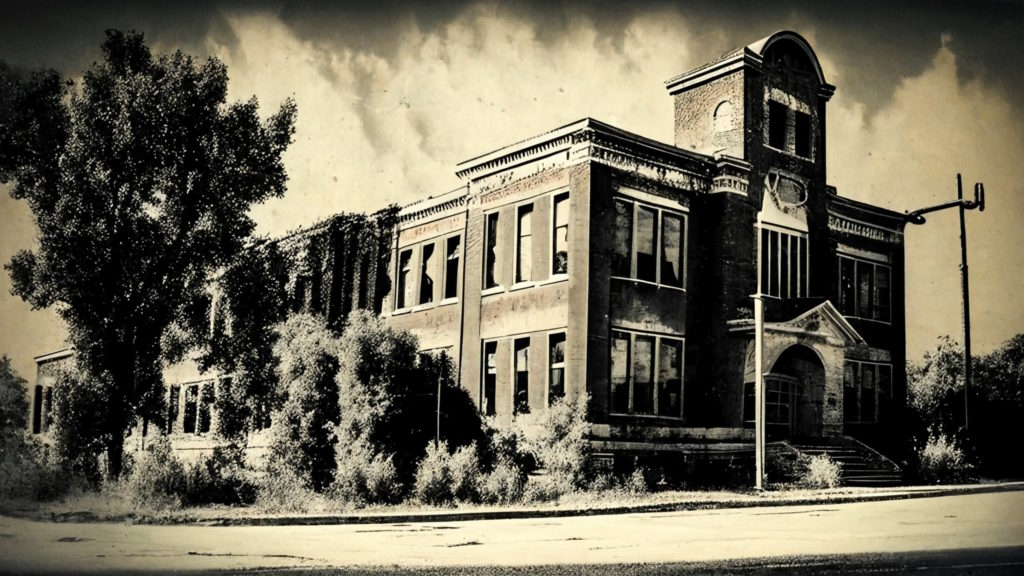
Several characteristics distinguish the current era of education. Most Americans are familiar with the public education system and university system. We’ll review it anyway to provide a means to differentiate the current era from the coming era of education, the One Person Schoolhouse.
The public school system consists of thirteen grades beginning with kindergarten and continuing with grades one through twelve. Schools are often broken into three parts: elementary, middle, and high.
Elementary schools include kindergarten through fifth grade. Elementary students learn as a group, often with a single teacher leading them through their entire day.
From the sixth grade on, students learn from specialized instructors who remain in their rooms for the day as different groups of students visit for a session that lasts between forty-five and ninety minutes. The students move from room to room during the day.
Students attend classes to earn credits toward meeting the requirements to obtain a diploma as set forth by the state legislature. In addition to the required courses, schools may require a student to choose a certain number of classes from a list of options. The options presented are for courses that cover life skills, art, music, technology, or maybe sports.
In a typical day, the student may arrive at school around 7:30 AM, attend four to eight classes depending on class duration, and leave school around 3:30 PM. Classes are generally held in lecture form, with students taking notes as the instructor speaks.
The public school system is streamlined to move a high volume of students through 13 years of education. The system is so well established that one could possibly schedule all thirteen years of classes for a student before that student ever sets foot in a kindergarten classroom.
Public school systems vary in the quality of education they provide, the level of security they offer, and the values they promote. For this reason, parents may seek (or yearn for) residence in a district with a school system that meets their expectations. The desirability of a school district may be a factor in the selling price of a house in that district.
Many educators in public school systems are union members. Unions often influence the operations of a public school. Unions represent the employees of the school, not the students, the parents, the taxpayers, or the community at large.
Administrators make up a high percentage of employees in a school system. The complexity of laws pertaining to education, the variety of services offered by a school system other than education, and the need to acquire funding through grants generate the need for administration staff.
Educational facilities double as meal delivery services. Eligibility requirements for free or subsidized meals vary by school district or state.
Public educational facilities must deal with violent children, homeless children, mentally ill children, and abused children. Some children come to school unready to learn, and the school educators and administrators and counselors must help ready them to learn.
And finally, some educators in the public school systems see themselves as guardians of the children against parents who disagree with their ideology. Parents and educators are at odds in some school districts.
That is a short summary of the highly complex educational system in the United States today.
Most private schools mimic the grade-based infrastructure of the public school system. The student can move between public and private schools as seamlessly as moving from one public school to another. Of course, credits must be synchronized between the schools, but overall, it can be done.
This universality of grade-based instruction establishes the grade-based infrastructure as the defining characteristic of the twentieth century era of education. The infrastructure is so deeply established that students who attend college follow the same grade-based, course-driven pattern.
Return to Home
Return to Evidence of the End of an Era
Continue to Strengths of the Current Era
Continue to Education is Cheap, Proof is Expensive